
Trade plans
Entry, stop, target, thesis and risk become part of the review instead of staying separate from execution.
Most journals store trades. QbarTrade helps your journal review them back by connecting plans, executions, notes, emotions, mistakes and performance patterns into one review workflow.
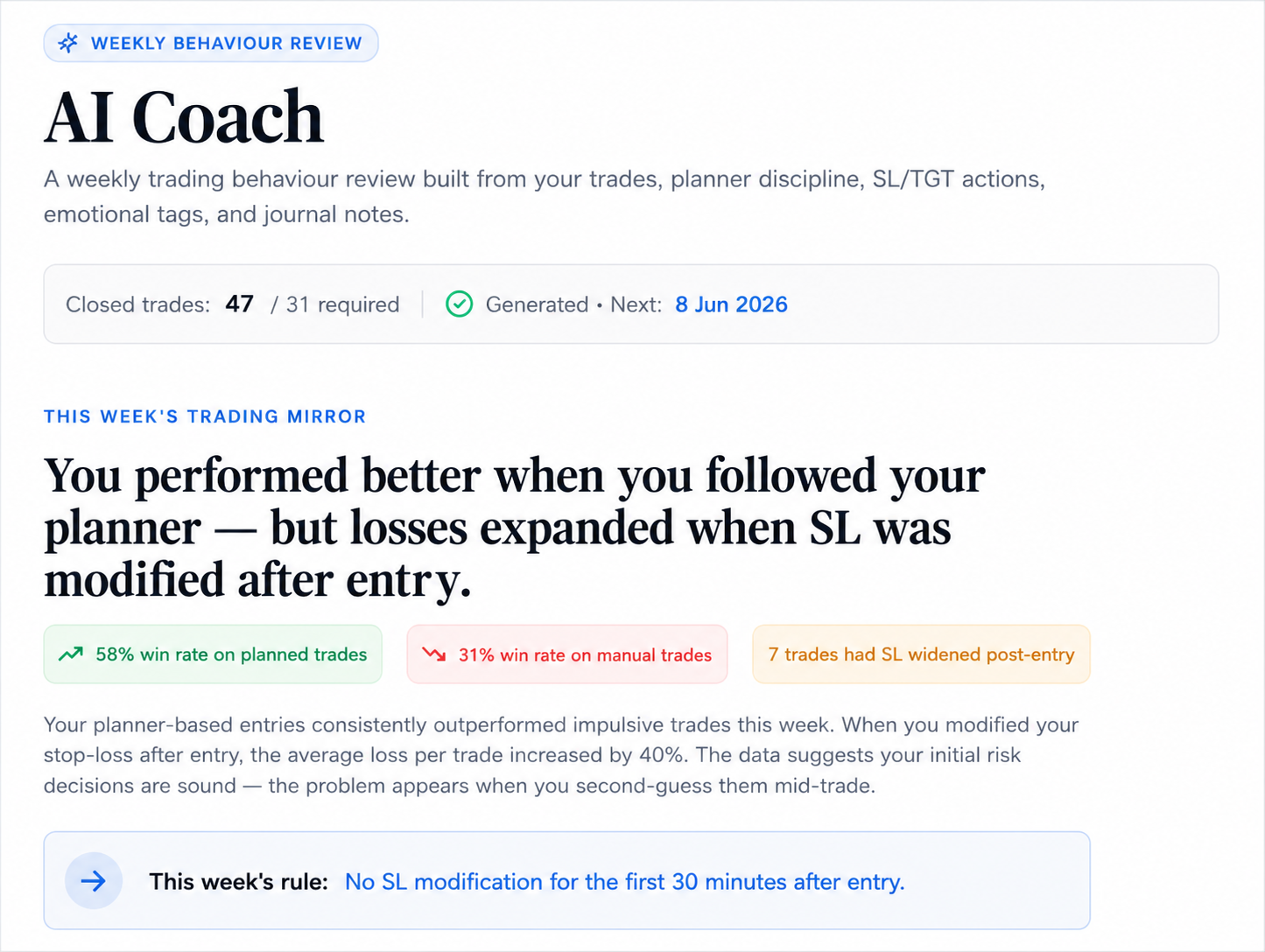
An AI trading journal uses your recorded trades, notes, tags and performance history to help summarize patterns, highlight mistakes and guide review. A normal journal stores the data. An AI trading journal helps you ask better questions about that data.
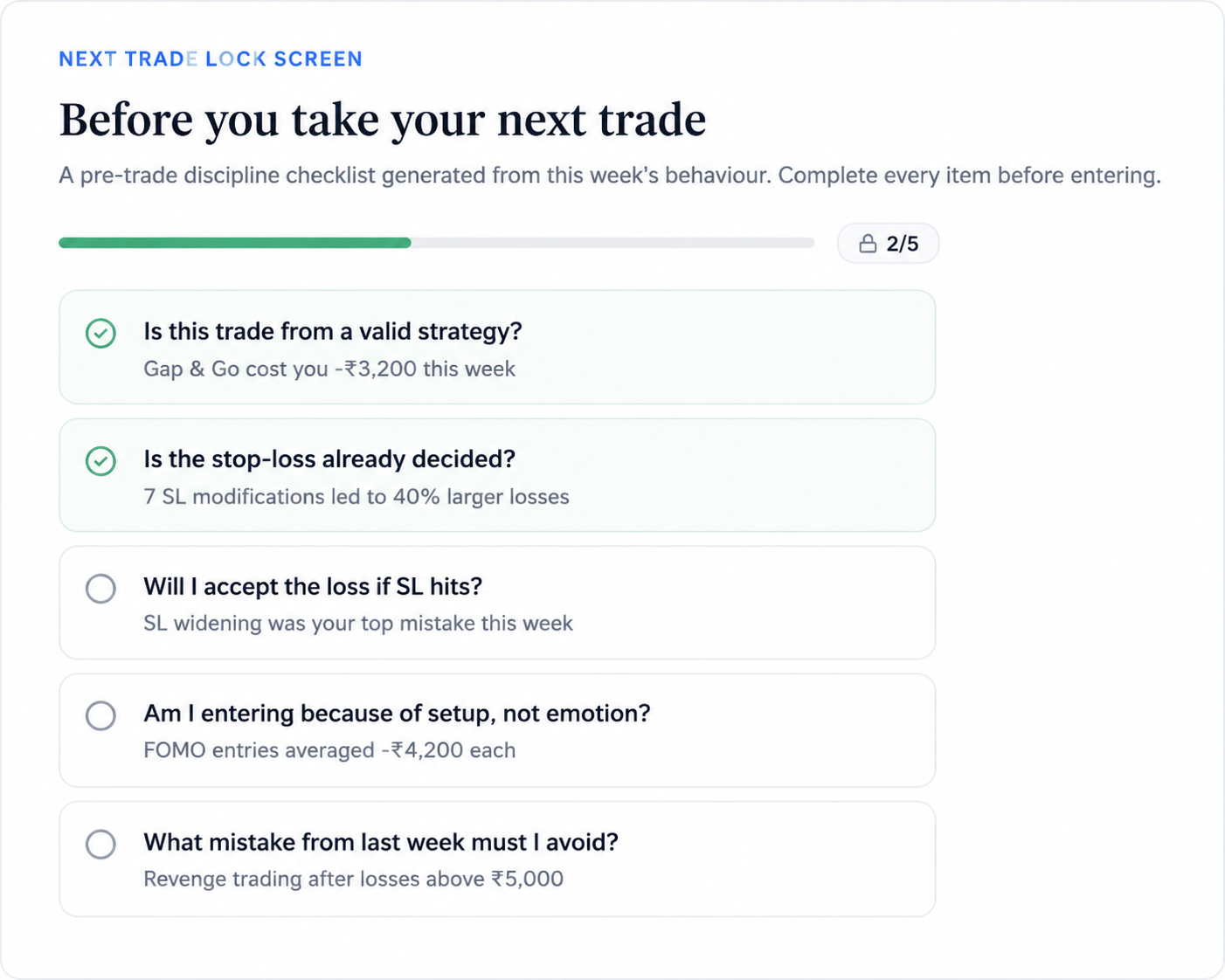
A chatbot without your journal context gives generic advice. A journal-aware AI Coach can review what you actually planned, logged, felt and changed during your trades.
Entry, stop, target, thesis and risk become part of the review instead of staying separate from execution.
Pre-trade, during-trade and post-trade notes give AI Coach context beyond entry, exit and P&L.
FOMO, fear, revenge, hesitation and confidence can be reviewed against outcomes and rule discipline.
Analytics help connect setups, risk, holding time and repeated behaviour with actual trade results.
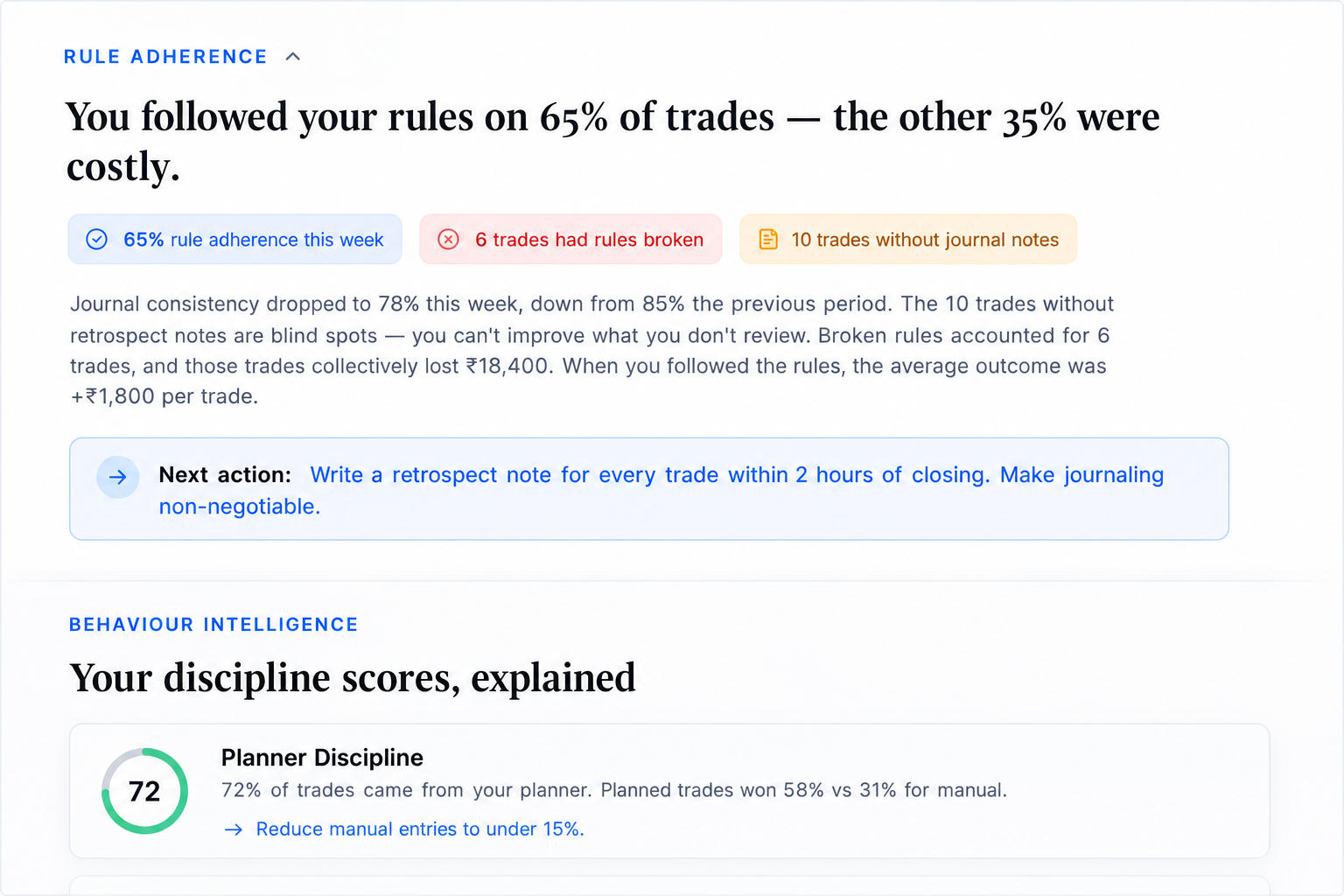
QbarTrade AI Coach is designed for educational trade review. It does not promise market predictions, guaranteed outcomes or buy/sell signals. The goal is to help you notice repeated patterns in your own trading behaviour.
AI review
Summarize patterns from journal context
Trader control
You still make the trading decision
No signals
No market prediction or profit promise
The most useful AI trading journal is not a robot giving stock tips. It is a review layer that helps connect your plans, actions, emotions and outcomes.
Was there a clear setup, entry, stop, target and risk before the trade started?
Did the trade follow the plan, or did the plan change once pressure appeared?
Did position size, stop loss or trade frequency change after losses or emotional trades?
Review FOMO, fear, revenge trading, hesitation and overconfidence across a real sample.
See which setups create better results and which ones repeatedly create weak decisions.
Summarize what repeated during a day, week or meaningful group of trades.
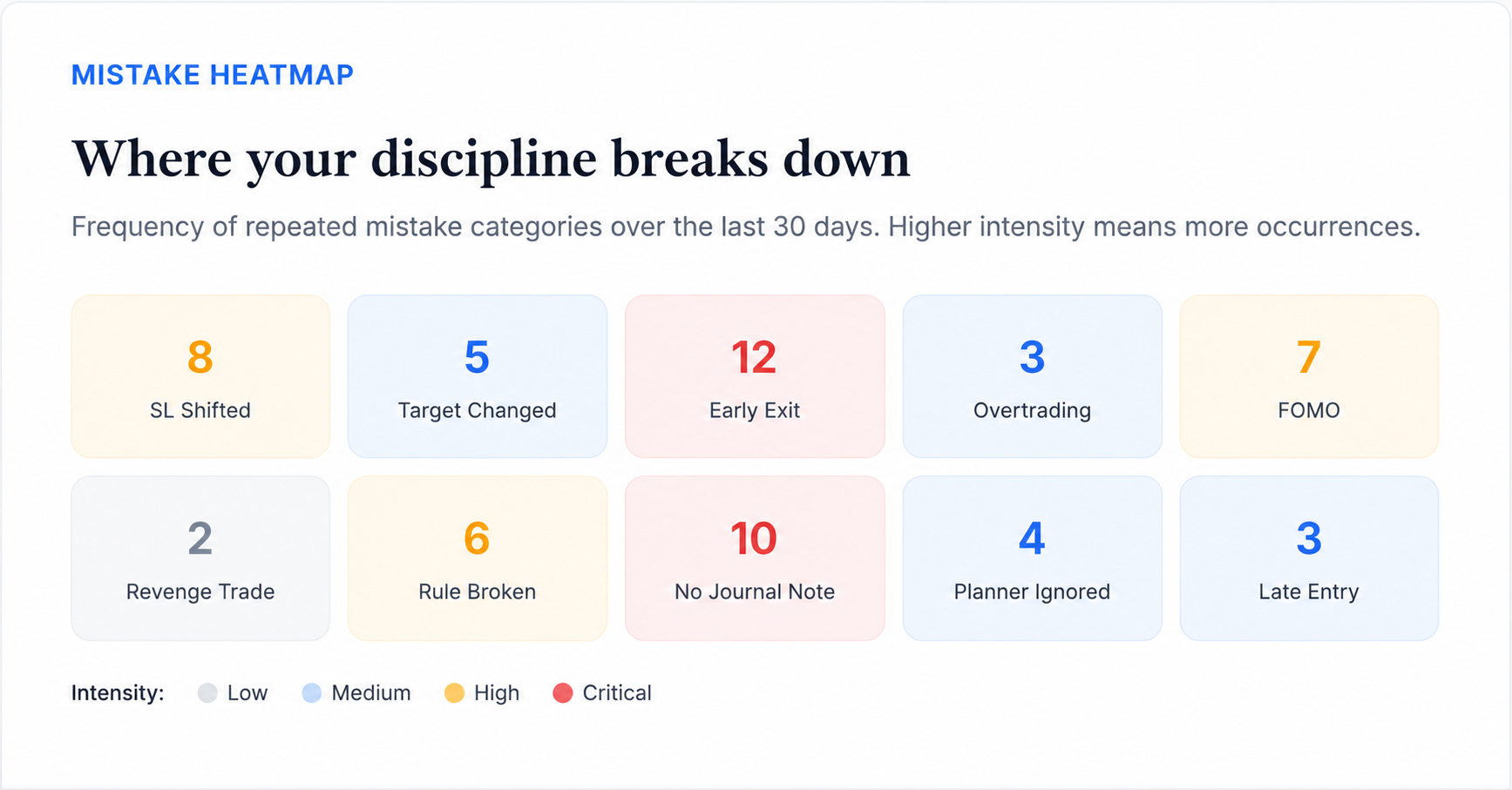
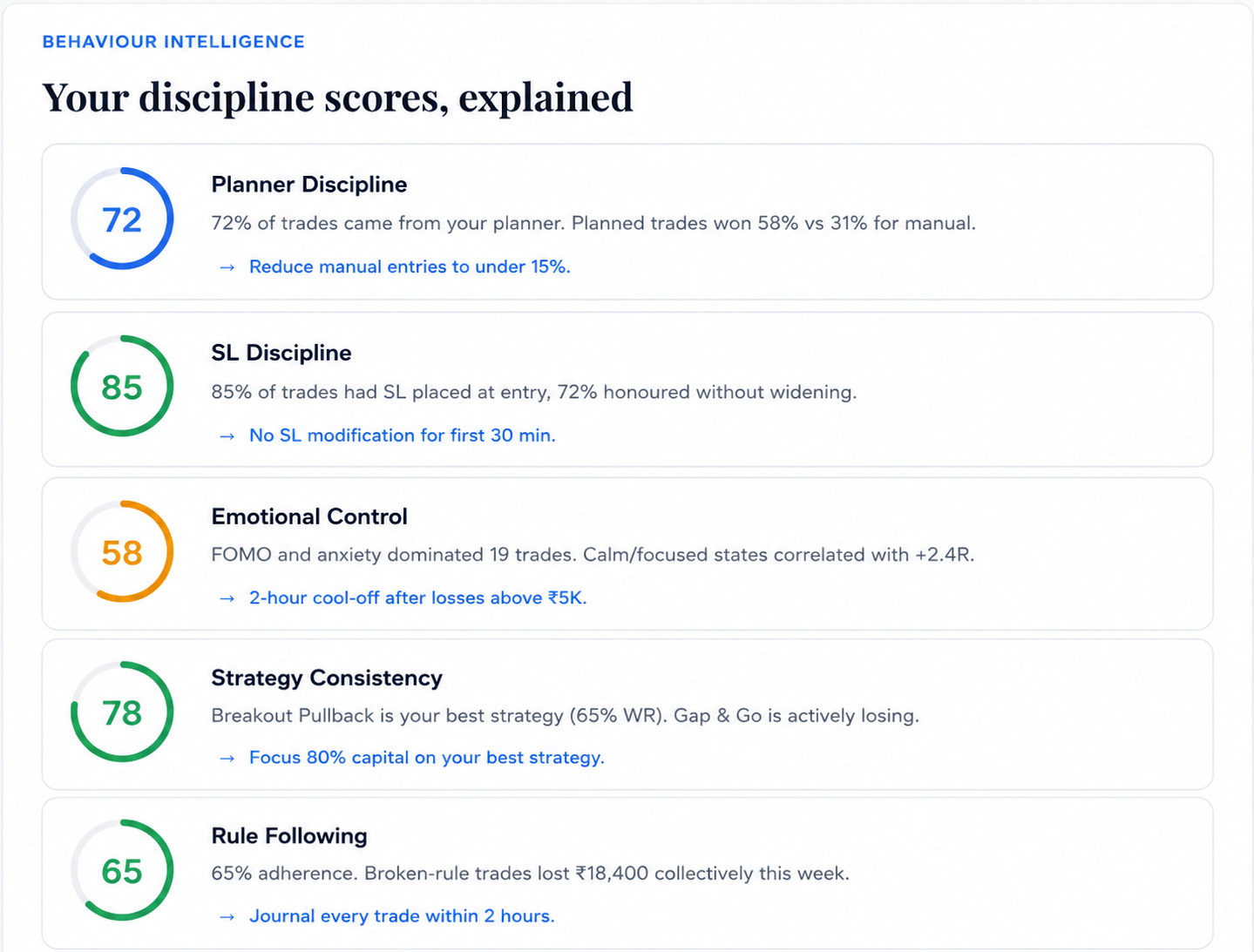
An AI trading assistant becomes useful when it works from your own trading records. Instead of asking for predictions, ask your journal what your behaviour keeps revealing.
Which setups do I abandon too early?
Do I lose more after moving my stop?
Which emotions appear before my worst trades?
Do I overtrade after a green morning?
Which strategy has good win rate but weak expectancy?
What mistakes repeated this week?
Instead of manually scanning every trade, use AI Coach to help summarize the week from your journal records, trade notes, emotional tags, planner discipline and outcomes.
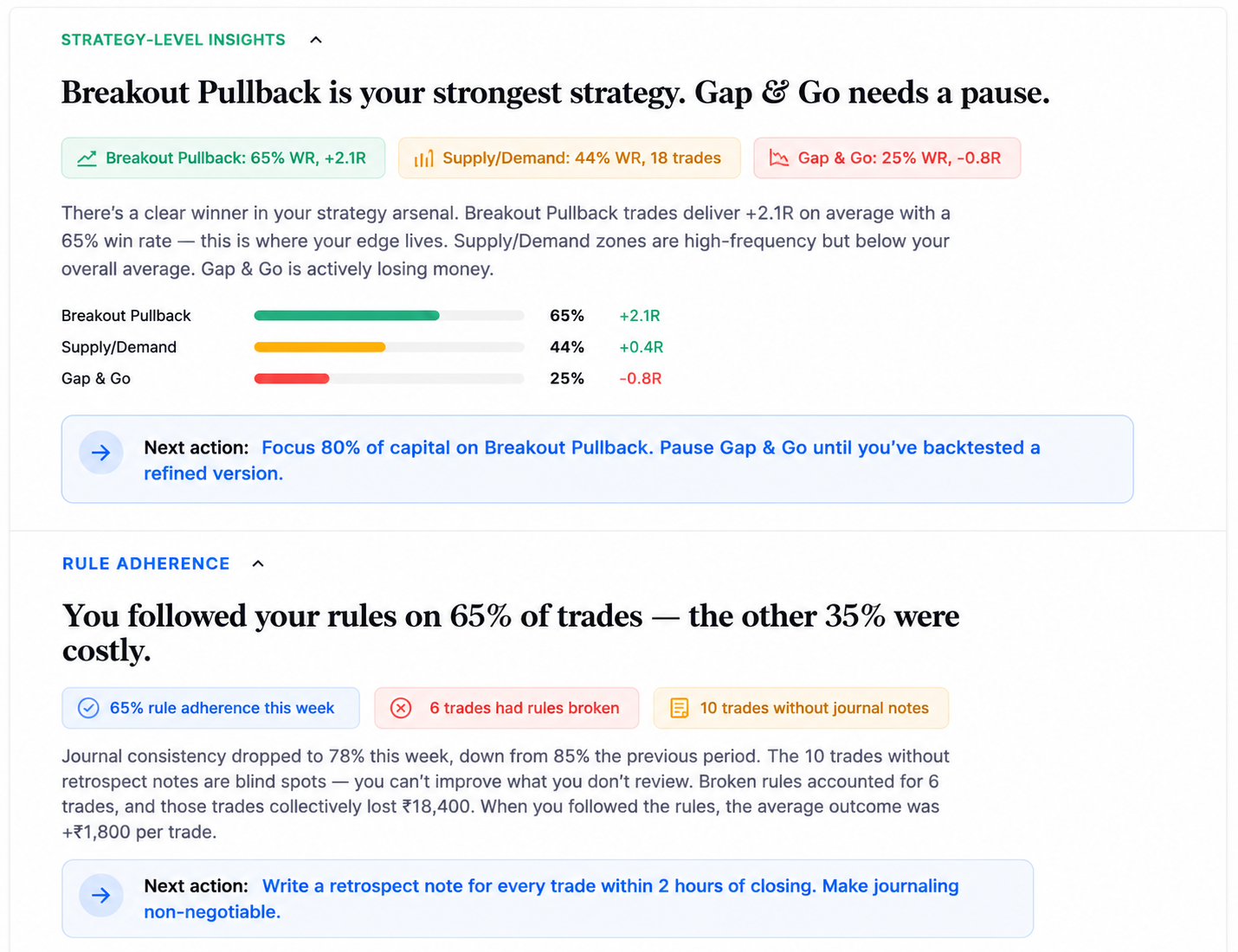
AI trading journal and AI trading bot are not the same thing. QbarTrade is built around learning from your trading history, not outsourcing responsibility for market decisions.
Where supported, QbarTrade connects Indian-market trade activity with planning, journaling and analytics so AI Coach can help review the process around those trades.
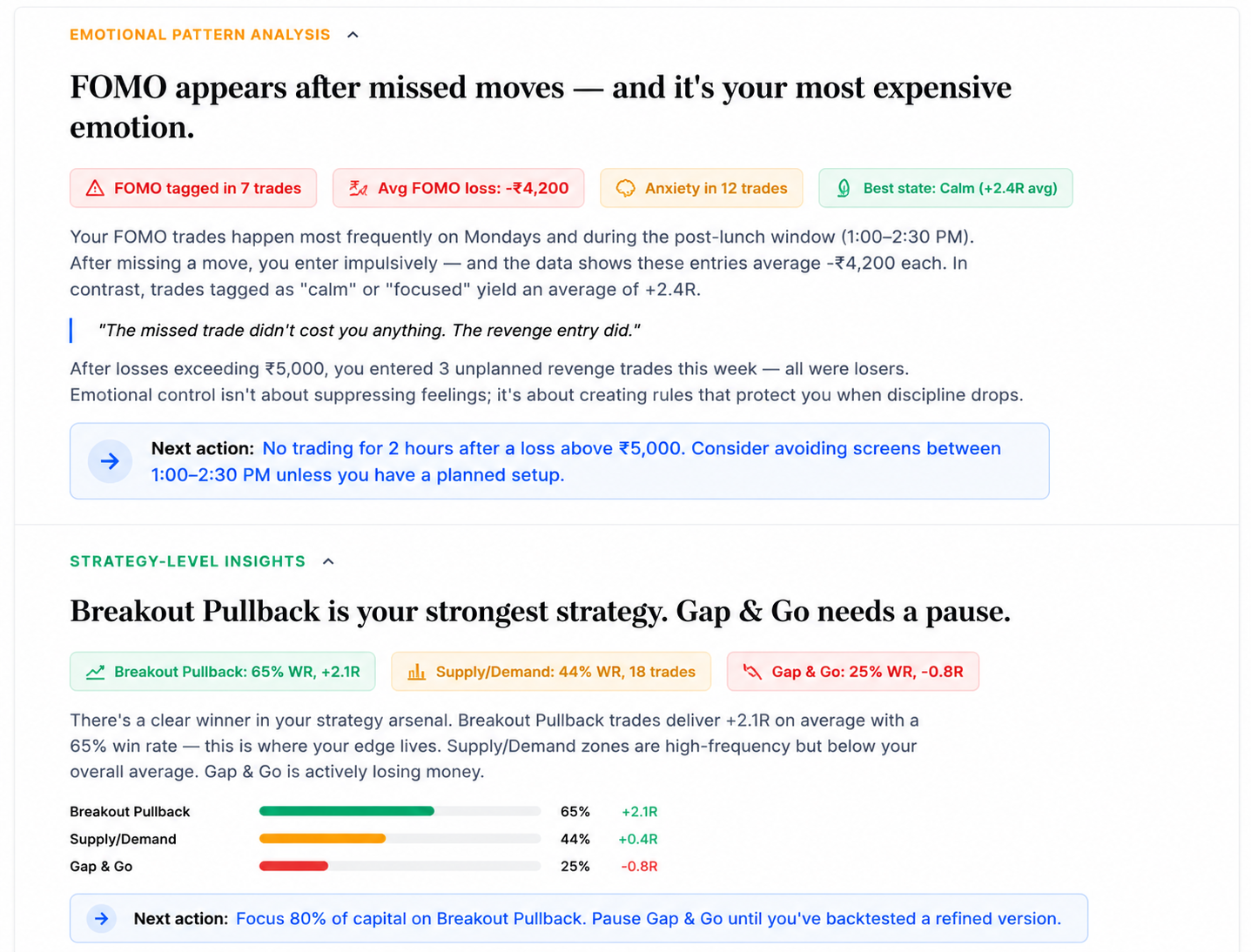
The AI layer is most useful when it sits on top of strong planning, journaling, imports and trading analytics.
An AI trading journal is a trading journal that uses your recorded trades, notes, tags and performance history to help summarize patterns, highlight repeated mistakes and guide review. A normal journal stores data; an AI trading journal helps you ask better questions about that data.
QbarTrade connects trade planning, supported execution/import workflows, journal notes, emotional tags and analytics. AI Coach can then help review that journal context for educational performance and behaviour insights.
No. QbarTrade AI Coach is positioned for journal-based educational review. It is not a market prediction engine, stock tip provider or buy/sell signal service.
No. QbarTrade belongs on the journal and review side of the workflow. It helps you study your own trading history instead of automating trade execution decisions.
AI can help surface repeated patterns in your own trade records, such as rule-breaking, overtrading, poor risk discipline or emotional entries. It should be treated as review support, not a guarantee that every mistake will be detected perfectly.
QbarTrade can support behaviour review when your journal contains useful context such as emotional tags, notes, mistakes and rule-adherence records. The quality of review depends on the quality and consistency of what you log.
Yes, where your Indian-market workflow is supported. QbarTrade is designed around planning, journaling and reviewing trades across supported Indian-market workflows such as equities, F&O and MTF.
Excel can work well for manual logs and custom analysis. An AI trading journal becomes useful when you want your notes, screenshots, tags, planning and analytics to stay connected so review does not depend only on manual filtering.
No. AI can help organize and review your trading records, but it cannot guarantee profits, remove risk or replace trader judgment.
The AI Coach positioning is built around journal-aware review. The best questions are about your own records, such as repeated mistakes, rule adherence, setup quality, risk behaviour and weekly review themes.
Use QbarTrade to connect plans, trade records, journal notes, emotional tags and analytics into a review process that can improve your next sample of trades.
Start journaling with QbarTrade